

We are privileged in Aotearoa, New Zealand to be able to grow a wide range of winter vegetables and crops throughout the year and although growers are faced with a multitude of challenges regardless of where they are in the country, over 90%* of many of our largest crops are grown for the domestic market. Indeed New Zealand is self-sufficient in fruit and vegetables.
*Source: Horticulture New Zealand
As growers, producing high-quality food goes hand-in-hand with safeguarding the environment in which those crops are grown. High quality produce means stronger yields and taking care of the soil ensures sustainable production for the grower, long term.
In this blog, we explore practical and proven ways to boost yield and crop quality – while protecting your soil and reducing input costs.
Mycorrhizal fungi for healthy soil and produce
Healthy soil is teeming with a complex ecosystem of worms, fungi, bacteria, and other microorganisms. The earth can’t sustain winter vegetable crops without them, and the addition of beneficial organisms will be a significant element to maintain the integrity of your soil.
Rootella will introduce your crops to Mycorrhizal fungi, a family of beneficial fungi that work symbiotically with your crops’ root system. These fungi create a vast network of fine strands (hyphae) that extend into the soil, improving root access to water and nutrients, while also enhancing disease resilience.
When used during planting, Rootella, Mycorrhizal fungi will give your crops improved access to water and nutrients, especially phosphorus which is often locked in the soil or washed into our water systems. The result: stronger, more resilient crops with reduced reliance on synthetic inputs and an increase in dry matter yields.
Together, these microorganisms help maintain a healthy soil microbiome, acting as a biological shield in the rhizosphere to reduce the risk of harmful soil-borne and water borne pathogens.
Did you know:
- Rootella contains the highest propagules of Mycorrhizal fungi on the market
- The organisms in Rootella are native to New Zealand
- Glomalin, a substance secreted by Mycorrhizal fungi, is where Carbon Dioxide ( CO2 ) is stored in the earth, so not only would you be helping your soil health but also sequestering atmospheric carbon too.
How can you utilise these biological strategies?
We have five Rootella products to suit all growing situations, but for farmers who are sowing seed crops such as carrots, parsnips and sweetcorn, Rootella F is perfectly suited. Early Mycorrhizal inoculation of seed at germination immediately improves the seedlings’ access to nutrients and water, and in particular phosphorus and nitrogen, allowing the plant to thrive, with potential reductions in synthetic fertiliser use and associated negative environmental impacts.
Allium crops do extremely well with their mycorrhizal symbionts and even crops that do not form mycorrhizal associations can still benefit from biological solutions and brassica’s are a prime example. Recent trials in Canterbury showed that Kale seed treated with Superzyme achieved a higher average dry matter of 17.85%. While dry matter isn’t a specific quality indicator for horticultural retail markets, it certainly shows an increase in yield for the grower and can correlate with better shelf life and firmer texture – both valuable attributes for producers and retailers alike.
Greenhouse Production and Fulvic Acid
Commercial greenhouse vegetable production is well established in New Zealand and according to HortNZ and Plant & Food Research, this is a key growth area – especially as land becomes more constrained in many growing regions across the motu. We have come to expect vegetables like tomatoes, capsicums and cucumbers at any time and greenhouse production ensures this year-round availability.
Greenhouse environments are well controlled but growers still face challenges like nutrient lock-up, root stress and pathogen / disease pressures. Our Fulvic acid product, Mobilizer, is a natural plant electrolyte that mobilises minerals to make them available to plants, especially in systems where pH or EC fluctuates.
Mobilizer, Fulvic acid, can significantly enhance photosynthesis by improving the plant’s efficiency in using available CO2. It does this through enhanced stomatal conductance, increased chlorophyll production for greater light absorption, and improved delivery of key nutrients essential for photosynthetic enzymes like Rubisco.
No matter what growing system or application you’re using — fertigation, hydroponics, foliar sprays, soil applications or seedling dips — Mobilizer (fulvic acid) works to improve nutrient efficiency, supporting healthy roots and microbes, and boosts resilience to environmental stress. Mobilizer also helps reduce input waste and crop variability, making it a smart addition to any vegetable production plan, seamlessly integrated into existing crop routines.
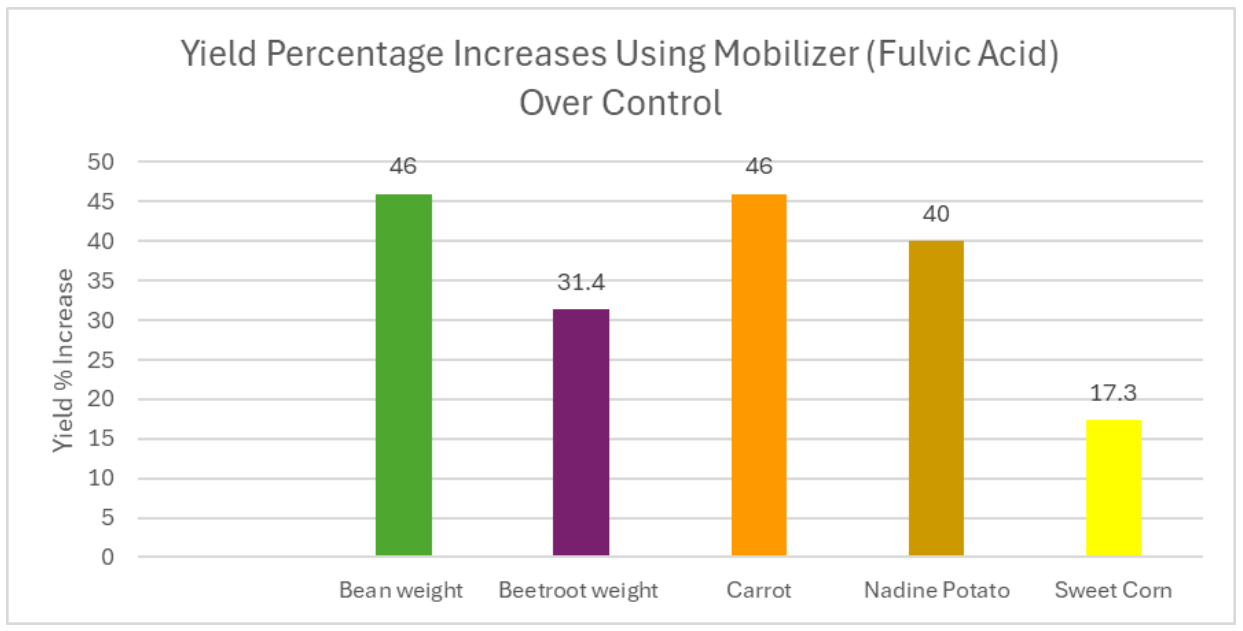
For field crops Mobilizer is often added pre plant into soil or with seed or seedling plantings and can also be utilised via fertigation schedules every 7–14 days to support consistent nutrient uptake reducing blossom-end rot risk of outdoor tomato crops. In leafy crops like lettuce or herbs, foliar applications during early growth stages help boost chlorophyll and reduce stress from transplant shock or fluctuating temperatures.
For hydroponic systems, Mobilizer mixes easily into nutrient reservoirs at low rates, greatly improving nutrient availability without affecting EC or pH. It can also be used as a root dip for seedlings in nursery before transplanting to encourage stronger early root development.
Ready to increase yields and protect your investment? Talk to us today about integrating these biological solutions into your growing operation and the many trials undertaken to date.


