A Dry Summer is easier to manage when you prepare before it arrives.
When the rain stops, the wind picks up and temperatures climb, a crop’s ability to cope has already been shaped by the condition of its soil, its root system, and its nutritional status.
That’s why preparing for drought shouldn’t start when plants are already showing signs of stress. It starts earlier, by building a healthy root zone, supporting the biological processes that help plants access water and nutrients, and ensuring crops are well positioned to respond when conditions become difficult.
With El Niño expected to influence New Zealand’s weather during the 2026–27 summer, growers in regions prone to dry conditions have good reason to consider their crop resilience strategies now. Stronger westerlies and an increased likelihood of dry, warm conditions in parts of the country could put additional pressure on water availability and crop performance.
For commercial growers, this is about more than keeping plants alive. It’s about protecting yield potential, maintaining quality and making every investment in crop nutrition and soil management work as effectively as possible.
In this article, we look at four tools that can contribute to a more resilient soil–plant system: mycorrhizal fungi, amino acids, fulvic acid and humic acid. Each has a different role, but together they offer a useful framework for thinking about crop resilience from the soil up.
Mycorrhizal Fungi (Rootella): Extending the Root Network
Arbuscular Mycorrhizal Fungi (AMF) form a symbiotic relationship with plant roots, effectively acting as a secondary, highly expansive root system providing:
- Improved Access to Soil Water: Mycorrhizal hyphae extend beyond the root surface and explore soil pores that plant roots cannot readily enter. This additional network improves access to water and nutrients in the surrounding soil, potentially helping plants make better use of available moisture during dry periods.
- Enhanced Nutrient Uptake in Dry Soils: Nutrients like phosphorus and zinc require water to diffuse toward plant roots. Because AMF hyphae bridge the dry zones between the plant and moisture reservoirs, they maintain nutrient uptake even when topsoils dry out.
- Improved Soil Structure (Glomalin): Mycorrhizae exude a sticky glycoprotein called Glomalin. This substance binds soil particles into stable aggregates, contributing to soil structure and stability.
Amino Acids (Biomin): Supporting Plant Function Under Heat and Water Stress.
Water stress can affect crop performance well before visible wilting occurs. It can disrupt photosynthesis, nutrient metabolism and other physiological processes that underpin growth and yield potential. Amino Acids help plants immediately respond to drought and heat because they are in a form that plants can immediately use, there is no energy required for conversion.
- Improving water relations – Certain amino acids, particularly proline, contribute to osmotic adjustment. This helps plant cells maintain water balance and cellular function when water availability declines.
- Supporting photosynthesis and energy production – Heat and drought can disrupt photosynthesis and carbohydrate metabolism. Amino acids help maintain these processes and support the energy plants need to sustain growth under stress.
- Supporting nitrogen and protein metabolism – Amino acids are involved in nitrogen transport, protein synthesis and the metabolic pathways that keep plants functioning. Stress can disrupt these processes, therefore the availability of amino acids for metabolism is particularly important.
- Activating antioxidant defences – Heat and drought can increase oxidative damage within plant cells. Certain amino acids help support antioxidant defences, limiting damage to cellular structures.
These mechanisms are interrelated: maintaining water balance, energy production and cellular protection, can help plants sustain physiological activity when environmental conditions become challenging.
Fulvic Acid (Mobilizer): Enhancing Cellular Resilience
Fulvic acid is a highly active, low-molecular-weight humic substance that acts as a natural biostimulant and chelator providing:
- Immediate Drought Stress Signalling: Fulvic acid stimulates the plant’s production of antioxidant enzymes and osmoprotectants (like proline). This helps plant cells retain their internal water pressure (turgor), preventing wilting and allowing photosynthesis to continue longer under heat stress.
- Maximized Nutrient Efficiency: It chelates (binds to) minerals in the soil, making them highly bioavailable to the plant. Because dry conditions generally lock up nutrients, fulvic acid ensures that the plant gets maximum nutritional value out of whatever moisture is available.
- Stomatal Regulation: Fulvic acid applications can help optimize stomatal conductance. This means the plant can close its leaf pores more efficiently during the hottest parts of the day to prevent excessive water loss through transpiration.
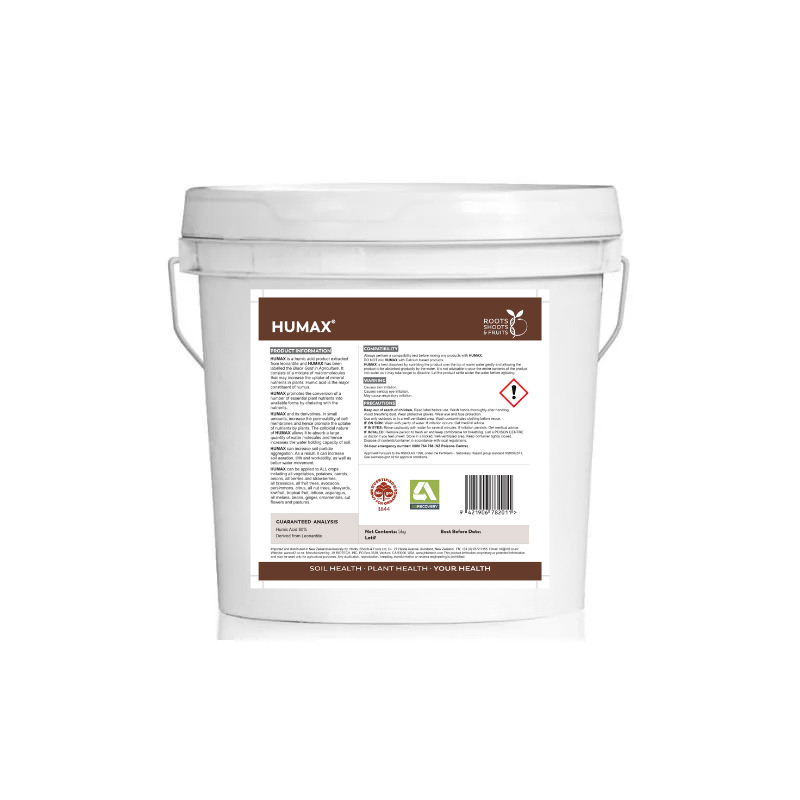
Humic Acid (Humax): Enhancing Water Holding Capacity Providing Plant Resilience
Humic acid provides enormous benefits to plant growth and especially under stressful conditions making it a useful component of a broader strategy to build soil and crop resilience ahead of dry summer conditions.
- Reduces Oxygen Deficiency : Quality Humic acids are rich in oxygen containing functional groups reducing oxygen deficiency in plants.
- Moisture Management: The colloidal nature of Humic acid allows it to absorb large quantities of water molecules, retaining up to 20 times its molecular weight in water increasing the overall water holding capacity of soil.
- Supporting Root Development: Humic acids help create a more favourable environment for root growth. Maintaining good soil structure supports water infiltration and helps roots access available soil moisture. A healthy, well-developed root system helps crops explore a greater volume of soil for available water and nutrients, supporting their ability to cope when surface soils begin to dry.
Putting it all together – A Combined Approach for Building Resilience from the Soil Up
No single input can eliminate drought stress. Crop resilience depends on a combination of factors, including soil type and structure, rooting depth, crop choice, plant nutrition, irrigation management and the weather itself.
However, supporting different parts of the soil–plant system can help improve a crop’s capacity to make use of available resources. Think of drought resilience as a system rather than a single intervention.
A healthy soil structure provides the foundation. Mycorrhizal fungi can expand the soil volume explored by plant roots. Balanced nutrition supports the biochemical processes needed for growth, while suitable humic and fulvic acid products can contribute to soil conditioning, nutrient interactions and plant physiological function. In most cases these are not additional inputs but a more critical look when making initial choices as alternative inputs may provide a much wider array of benefits than current choices do.
| Input | Primary Role | Potential Benefit to the Grower |
| Rootella – Mycorrhizal fungi | Extends the effective soil-exploring network beyond the roots | Increases access to water and nutrients, particularly phosphorus. An insurance policy that protects the loss of expensive inputs, keeping production ticking over. |
| Biomin – Amino Acids | Supports plant metabolism and physiological processes | Immediately available (free) amino acids let plants bypass the energy-intensive process of synthesising them from scratch, enabling rapid metabolic recovery and defense during environmental stress, reducing grower stress. |
| Mobilizer – Fulvic Acid | Supports nutrient interactions and plant physiological processes | A natural plant electrolyte that improves nutrient-use efficiency, alleviates plant wilt and helps plants to withstand extreme heat or cold. |
| Humax – Humic Acid | Support soil conditioning, root development and plant responses | Contributes to improved root-zone conditions for nutrient availability, water holding capacity, and oxygen year on year improving growers main asset – your soil. |
Prepare Now, rather than React Later
The takeaway is simple: drought resilience starts well before the first signs of stress. By supporting the soil, the root system and the plant’s ability to use available resources, growers can take proactive steps towards protecting crop performance and the return on their inputs.
At Roots, Shoots & Fruits, we believe that healthy soil and healthy plants are the foundation of resilient, productive growing systems. When reviewing your crop programme ahead of summer, our team can help you consider where biological and nutritional products may fit into your existing management strategy.
Recommended Products
Biomin N – Product Information Sheet