
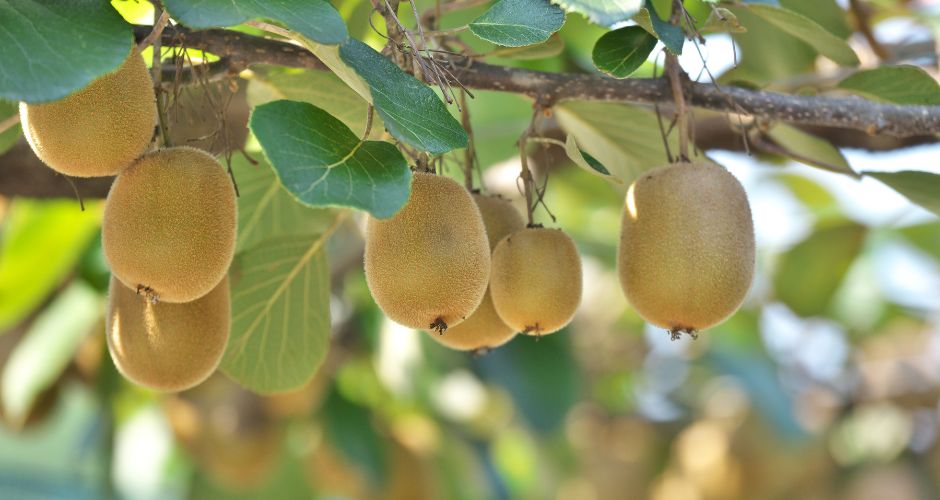
While focus on producing a profitable harvest that meets all quality parameters is extremely important in growing Kiwifruit, and indeed any fruit, post-harvest care should not be ignored, so don’t relax until the job is done. Replenishing the lost reserves utilised by the vines in carrying and producing a crop becomes the new focus to ensure optimum vine health, yield and quality fruit for next season and that starts right after harvest.
Post-harvest is a critical window for kiwifruit, as vine management shifts from fruit removal into recovery and reserve-building for the following season. Root activity is elevated during this period, supporting nutrient uptake and storage while the canopy continues to photosynthesise. Supporting root health, maintaining functional leaf area as long as possible, and ensuring balanced mineral nutrition during post-harvest can influence yield, fruit quality parameters and vine health and performance in the next season.
During Post-harvest vines and fruit trees actively transfer nutrients, either from the soil or canopy to be stored as carbohydrates. Carbohydrate storage mode stimulates the root system to actively take up native and soil-applied minerals; however, without adequate levels of specific nutrients stored during this period, bud break, flowering, and fruit set may be compromised the next season.
What minerals are crucial in the Kiwifruit post-harvest phase, and why?
Whilst the macro mineral Nitrogen is important, Phosphorus is generally the limiting element in keeping post harvest windows open longer for improved uptake. Plants that shut down exhausted immediately after harvest are often phosphorus deficient and this can mean plants go into dormancy without storing adequate reserves for next season. Foliar Phosphorus sprays are the fastest and most viable solution.
It is commonly known that TZG (Taste Zespri Grade) measures the sweetness and quality taste parameters of kiwifruit based on Dry Matter, Hue profiles etc to incentivise growers economically to grow high quality fruit. However, Kiwifruit growers don’t tend to realise the importance of trace minerals and specifically Iron and Manganese in doing so. Quite large quantities are utilised by kiwifruit during the season, especially on heavy crops and often either these minerals are missed in foliar applications before flowering as they are not considered very relevant compared to NPK or further applications are required during the season due to the under estimation of the plant needs.
The content of sugar in fruit is an important economic index, which is significantly promoted by available iron. Other fruit quality parameters such as hue are also impacted by iron levels.
Manganese significantly impacts both flavour and colour of fruit by playing a critical role in metabolic processes, enzyme activation, and the synthesis of compounds responsible for both taste and pigmentation, including sugar accumulation.
Both these minerals are critical to growers’ crops wishing to reach quality TZG parameters.
Calcium is a mineral that should be a top priority for all fruit growers, including Kiwifruit. It is crucial for skin strength, cell wall integrity and membrane stability as well as being directly linked to reduced skin damage, inking and storage disorders. Calcium is very immobile in the soil and plants so foliar applications of bioavailable Calcium should form an important part of programs.
What is inking?
Timing is a key factor when applying minerals to Kiwifruit and other furry skinned fruit to prevent ‘inking’ – brown/black skin discoloration which affects the fruit’s cosmetic appearance. When fruit skin is damaged, heavy metal reactions can worsen the injury, leading to the release of phenolic pigments such as anthocyanins and chlorogenic compounds that cause the disorder known as inking. Because of this, growers must apply trace minerals to kiwifruit before flowering and should avoid applying further heavy metals such as iron or manganese to crops carrying fruit until the post-harvest period; timing is indeed important to ensure adequate levels for the next season.
Calcium of course is not a heavy metal so can be applied right up to harvest to meet quality demands.
The Biomin Solution
The technology behind Biomin Mineral Nutrition represents an advanced approach from generic and synthetically chelated foliar nutrition. Biomin minerals are organic glycine chelates designed to be more effectively taken up by the plant, transported systemically via both the xylem and phloem. This allows rapid uptake, typically within a few hours of application, allowing for improved management of vine canopies without compromising the support of nutrient movement.
- Biomin Iron and Biomin Manganese for flavour and colour
- Biomin Calcium for keeping quality, skin health as well as fruit colour
- Biomin Magnesium – Central to chlorophyll and post-harvest photosynthesis, Mg also supports carbohydrate production and storage in roots and canes and is important for vine recovery after fruit removal.
- Biomin Zinc – Key for enzyme activity and hormone regulation and linked to bud health and spring growth. Zinc is very immobile and soil supply alone is often insufficient, hence the need for foliar feeding.
- Biomin Boron – Important for carbohydrate support and cell wall formation, Boron also plays a part in root health and bud development.
- Biomin Copper – Supports cane maturation and lignification and vine resilience going into dormancy. Biomin Copper is designed to support copper nutrition without contributing to soil accumulation. The glycine-chelated form improves plant uptake and internal mobility, allowing low rates to be used efficiently. This makes it well suited to situations where copper sufficiency needs to be maintained without compromising soil health or microbial activity.
- Biomin Booster – Multi Trace minerals for vine resilience and recovery post-harvest
Biomin Iron and Biomin Manganese are two important glycine chelated, single-mineral products from the Biomin range that should be a part of your kiwifruit post-harvest regime either in a single mineral formulation or as a Biomin booster. If levels are low, adding Biomin Magnesium and/or other secondary or trace minerals should be considered.
BIOMIN minerals are systemic and bio-available to plants, 100% soluble and absorbed within hours of application to rectify deficiencies and provide mineral nutrition when needed most quickly.
For information about Biomin Iron click here.
For information about Biomin Manganese click here.
For information about Biomin Calcium click here.
For information about Biomin Booster here.


