
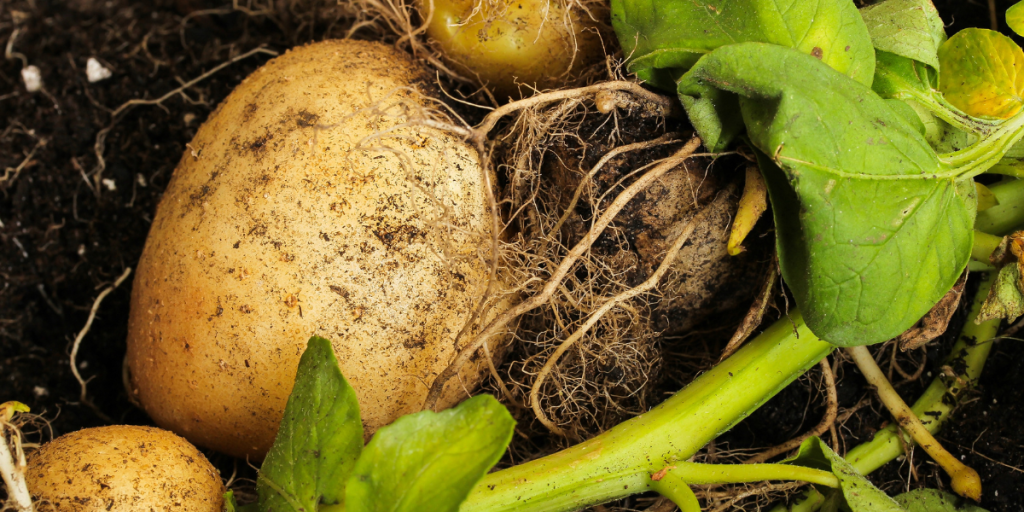
This article was published in October and caught our attention. It’s great to read about Canterbury Potato growers’ success in fighting tomato potato psyllid, which causes ‘Zebra Chip’ disease. It is also heartening to read that natural solutions, rather than chemicals, are being investigated to combat this destructive pest.
At Roots, Shoots & Fruits, we are all about using natural solutions to ensure crops are produced well for the farmer, their whanau and the wider community and environment.
We know that healthy crops have natural defence mechanisms that they deploy against pests and diseases. The utilisation of different mechanisms is an important factor in prevention and one of the reasons why pathogens do not become resistant to natural biological agents.
Precision targeting is mentioned in the article as a key factor in reducing the population of tomato potato psyllids in potato crops. Attacking the eggs and the nymphs means that the numbers of adults are limited and less spraying is needed – saving the grower time and money.
Bio-repel garlic oil
This trial, Effects of Garlic Oil on Tomato Potato Psyllid, conducted in 2013 by Plant and Food Research in Patumahoe using Bio-Repel, a completely natural insect repellent from Garlic oil, discovered the same thing. Bio-Repel garlic oil significantly reduced nymph numbers over four assessment dates. The reduction of insecticide applications in the potato industry, and across all horticultural and agricultural sectors in New Zealand, is crucial to improve environmental and human outcomes.
Taking chemicals out of the food chain and adding nutrition should be goals we strive for, and using natural, non-toxic solutions such as Bio-Repel to fight pests is a great start. Bio-Repel will not harm beneficial insects that predate the tomato potato psyllids.
You can read more about Bio-Repel here: BioRepel (O) 2022.pdf
The researchers at Lincoln University have also found that Calcium deterred the tomato potato psyllids from feeding and spreading zebra chip disease (based on work in the laboratory). While researchers said they did not yet know why the Calcium worked so well, there is much evidence to show that healthy plants do not get attacked by insects. Entomologist Dr. Thomas Dykstra has studied this at length and we at Roots, Shoots & Fruits agree!
Insects use diverse feeding strategies to obtain nutrients from their host plants. Rather than acting as passive victims in these interactions, plants respond to insect attacks by producing toxins and defensive proteins that target physiological processes in the insect. Emitting these volatiles attracts insect predators and bolsters resistance to future threats. A detailed understanding of plant immunity to insect predators will likely provide new insights into basic mechanisms of chemical communication and plant-animal coevolution and may also facilitate new approaches to crop protection and improvement.
How does that tie in with Calcium showing efficacy against the tomato potato psyllid?
Calcium is a super-essential nutrient for plant growth and development. Many plant diseases are associated with low calcium, and many physical disorders in crops can be attributed to calcium deficiencies.
Calcium has an effect on the cell walls of plants by making them more resistant to insect attack and pathogen penetration. A plant under attack will mobilise Calcium to promote natural immunity defences and hormone responses. And if there is no Calcium to mobilise? Calcium deficiencies mean plants cannot activate built-in responses to insect attacks, and a lack of calcium will also impact fruit quality.
For potatoes, Calcium is important for tuber development and a lack of Calcium can result in what is widely referred to as an ‘internal rust spot’. This is a physiological defect caused by cell death, resulting in small brown spots in the flesh. Calcium is vital for optimum storage and keeping qualities – crucial for a vegetable like Potatoes.
Our glycine-chelated Biomin Calcium can move via the phloem, which is important since xylem bundles in many crops break, reducing the ability of Calcium inputs to correct deficiencies. Biomin Calcium moves systemically through plants, to the fruit and other areas of need.
You can read more about Biomin Calcium here.
Read the full article here. For more information and reading – Plant defense against insect herbivores & Calcium Signaling in Plant-Insect Interactions


