

As we enter the colourful season of spring, in our gardens, it’s time for growers to roll up their sleeves, incorporate organic fertilisers, and begin new season plantings.
This time of the year allows growers to plant new and exciting crops to re-evaluate their space, and incorporate sustainable practices that can positively impact your soil and the planet.
Spring is the best time to sow seeds, including carrots, beetroot, peas, lettuce, cabbage, tomato, capsicum, cucumber, melon and eggplant.
Continue reading as we explore how organic fertilisers and beneficial biologicals can improve the health of your soil and produce, and help balance the delicate carbon cycle through the process of carbon sequestration. These practices are not only crucial for enhancing your spring garden but also for carbon storage, capturing and retaining carbon in the soil to reduce atmospheric CO2 levels.
By incorporating these environmental products into your gardening routine, you actively participate in achieving carbon zero goals, promoting a sustainable and eco-friendly approach to agriculture. Together, we can nurture healthier soils, grow robust plants, and contribute to a cleaner, greener planet.
A Green Approach to Growth
We often think of a ‘green’ approach to growing as being the same as ‘organic’ growing, but these terms aren’t identical. Organic refers to growing methods that avoid synthetic chemicals, pesticides, and fertilisers, with certification to ensure adherence to strict environmental standards. On the other hand, a ‘green’ product generally describes something that benefits the environment.
However, these ideas often overlap. At Roots, Shoots & Fruits, our products are organically certified and made with ingredients that are safe for humans, the environment, and plants. They’re also classified as environmental products due to their positive impact on soil health and the planet. This dual focus aligns with our commitment to sustainable practices and the goal of achieving carbon zero, as our products enhance ecosystems while reducing carbon footprints.
By incorporating organic fertilisers alongside highly bio-available organic mineral nutrition and beneficial fungi and bacteria into your growing practices, you can revitalise your soil and create the ideal environment for plants to thrive. This not only boosts plant health but also supports carbon storage and sequestration in the soil—essential steps in the journey toward a carbon zero future.
By choosing these environmental products, you are supporting both the health of your garden and the broader goal of mitigating climate change. This holistic approach nurtures your plants while positively impacting our health and the health of our planet.
Natures Climate Warrior
Hold onto your gardening gloves; we’re diving into one of nature’s most impressive wonders: carbon sequestration. It might sound fancy, but it’s nature’s way of maintaining the balance of carbon dioxide in the atmosphere by removing it and storing it in either solid or liquid form.
We are all aware that greenhouse gas emissions are causing the earth to warm at an alarming rate and have major impacts on the climate. The planet naturally releases and absorbs huge amounts of carbon dioxide, but currently, the carbon cycle is out of balance. Carbon dioxide is being added to the air faster than the planet’s sinks can absorb (or sequester) it.
So, how can your garden play a part in this natural cycle? The magic happens underneath your feet, in the soil. It is well known that soil, along with the ocean, is an important carbon sink for the planet, capable of storing much more carbon than vegetation alone.
Healthy soils, teeming with beneficial microbes, store more carbon. So, when you’re out in your garden, you’re not just creating a beautiful space. You’re actively participating in a process that can mitigate the ravages of climate change and reach a carbon zero goal. A reminder that even the smallest actions we take in our own backyard can have far-reaching effects for us and the natural world.
To read more about fighting climate change in your garden, read this article here.
The Dynamic Duo: Rootella (Mycorrhizal fungi) and Superzyme Organic Fertilisers
When you’re planting this spring, add Rootella, mycorrhizal fungi, to your soil for plants that thrive and soil that is alive with beneficial fungi. Mycorrhizal fungi are the best friends a plant could ever have!
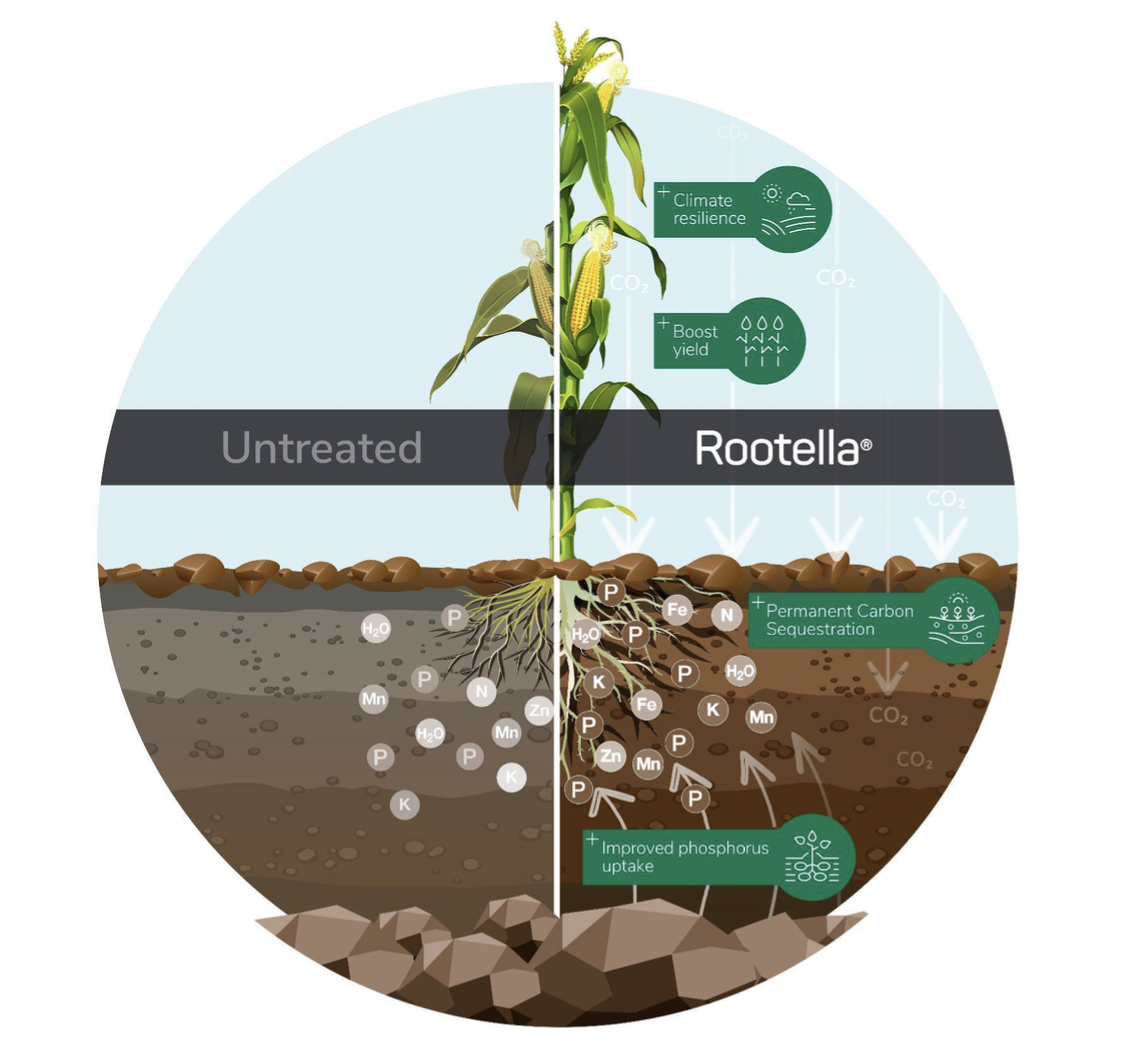
Adding organic fertilisers like Mycorrhizal fungi to your soil forms a network of microscopic threads that extend the plant’s root reach, allowing increased access to water and nutrients. Not only that, but these fungi help minimise drought stress and improve disease resistance for garden disease control, as well as stabilise soil and produce Glomalin, a vital link in carbon sequestration.
The diagram below shows the difference Rootella, mycorrhizal fungi can make to your soil with benefits both above and below ground, in comparison to untreated plants.
Partner Rootella with Superzyme, and you have a dynamic duo of organic fertilisers that will help your plants thrive in all conditions!
Superzyme contains beneficial bacteria and fungi that enhance soil life. Soil is a living entity occupied by microflora and fauna. A healthy soil is one where all the organisms the plant requires are present and functioning. The use of Superzyme re-introduces these beneficial organisms that plants require to function at optimal conditions.
Before introducing new plants to your spring garden, consider our organic fertilisers powerhouse pairing, to amplify your plants’ potential.


